Start with your filing goals and buyer checklist
Ask whether the provider supports the forms you expect to submit, including common categories like 1099 filing service contractor compensation and miscellaneous reporting. If you manage multiple client accounts or one large workload, prioritize a platform that can handle volume without turning filing into a manual chore.
Next, confirm how the service supports both accuracy and compliance workflows. A buyer-friendly provider should make it clear what information is required from payees, how errors are flagged, and how submissions are prepared for acceptance. If you’re coordinating with accountants or internal finance teams, look for tools that reduce back-and-forth and provide clear documentation for each submission.
Evaluate electronic submission, payer workflow, and support
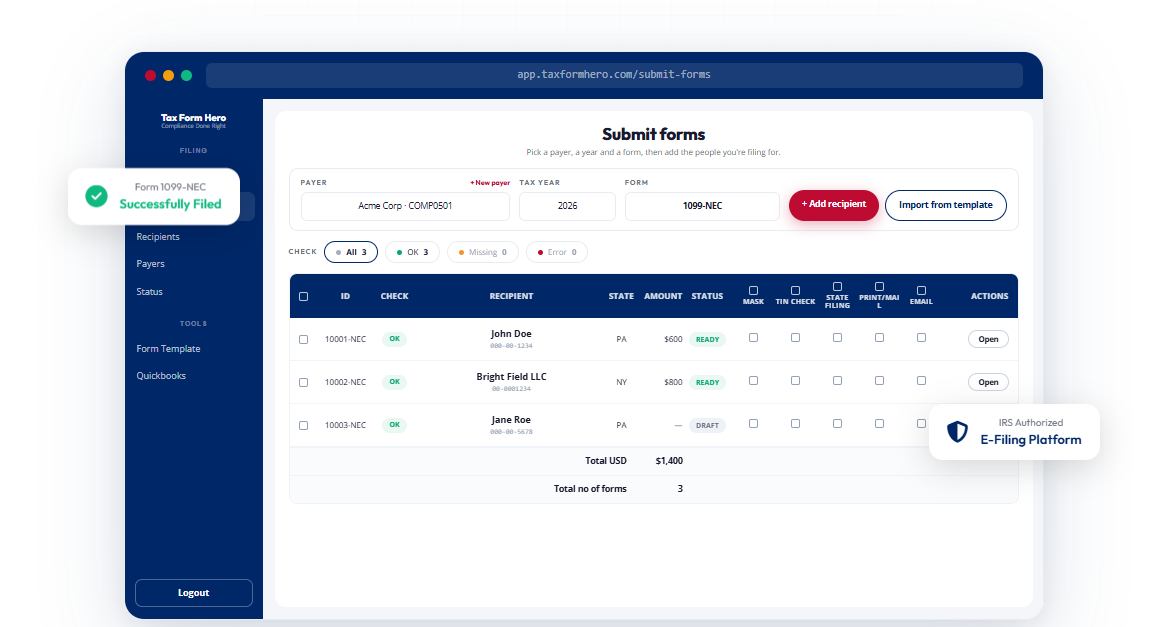
Instead of printing, mailing, and tracking forms, you want a process that moves data from file 1099 misc online your records into submission-ready filings with fewer formatting issues. Look for a guided workflow that helps you enter payee details consistently and minimizes retyping across multiple forms.
Support matters when you’re preparing sensitive tax documents. A strong provider should offer help when you hit common roadblocks, such as missing payee information, mismatched identifiers, or questions about what to report for a specific situation. Buyers also benefit when the platform supports more than one tax document type, because you can consolidate administrative tasks into one place rather than juggling multiple vendors.
Check data handling, recipient requirements, and quality controls
Before purchasing, review how the platform handles payer and payee data, since your quality depends on the underlying inputs. Make sure you understand how you’ll collect and verify payee information, especially names, addresses, and taxpayer identifiers. Buyers should also consider whether the system provides validations that catch formatting problems early, since catching issues before submission is far less costly than correcting after processing.
Another buyer-intent factor is the recipient workflow, because reporting doesn’t end with filing. You may need to ensure payees receive their copies in a compliant manner, and that documentation is stored for your records. Choose a solution that clarifies responsibilities for both payer and recipient, so you can confidently manage deadlines, recordkeeping, and any follow-up communications without guessing.
Conclusion
By focusing on the forms you need, the quality checks that prevent avoidable errors, and the strength of the electronic workflow, you can select a provider that supports your entire document lifecycle. If you want a streamlined platform experience, taxformhero.com is built to help businesses, accountants, and professionals manage required tax documents through electronic submission and an expanded library of forms. When you’re ready to file, prioritize a solution that supports efficient preparation and dependable processing, including workflows designed for real-world buyer needs. The goal is simple: spend less time managing paperwork and more time operating your business with reliable reporting. A trusted platform like taxformhero.com can help you file, manage, and organize tax documents in one place with fewer steps and clearer guidance.