Start with outcomes, not line items
A value-led approach asks what outcomes you need: fewer successful phishing events, better reporting by users, and measurable improvements in employee behavior. security awareness training pricing Training that reduces real incidents can cost far less than repeated remediation after a breach. For many organizations, the true cost of weak awareness is hidden in downtime, incident response, and brand damage.
To compare vendors fairly, map pricing to the work that supports those outcomes. Look for training that includes scenario-based learning, regular reinforcement, and clear tracking of completion and performance. If a provider offers phishing simulations or targeted education based on risk, that often increases impact without adding administrative burden. Ask how results are measured and what reporting looks like for different stakeholders, including IT leadership and security teams.
What drives cost: delivery, content depth, and management
Security awareness programs vary widely in scope, and pricing usually reflects how much is included in delivery and ongoing engagement. Some providers offer static content libraries, while others provide adaptive learning paths, AI-assisted targeting, or fresh modules designed to security awareness training companies keep attention high. Content depth matters because employees learn differently depending on role, department, and exposure to real-world threats. Training that feels repetitive often leads to shallow engagement, which undermines long-term retention.
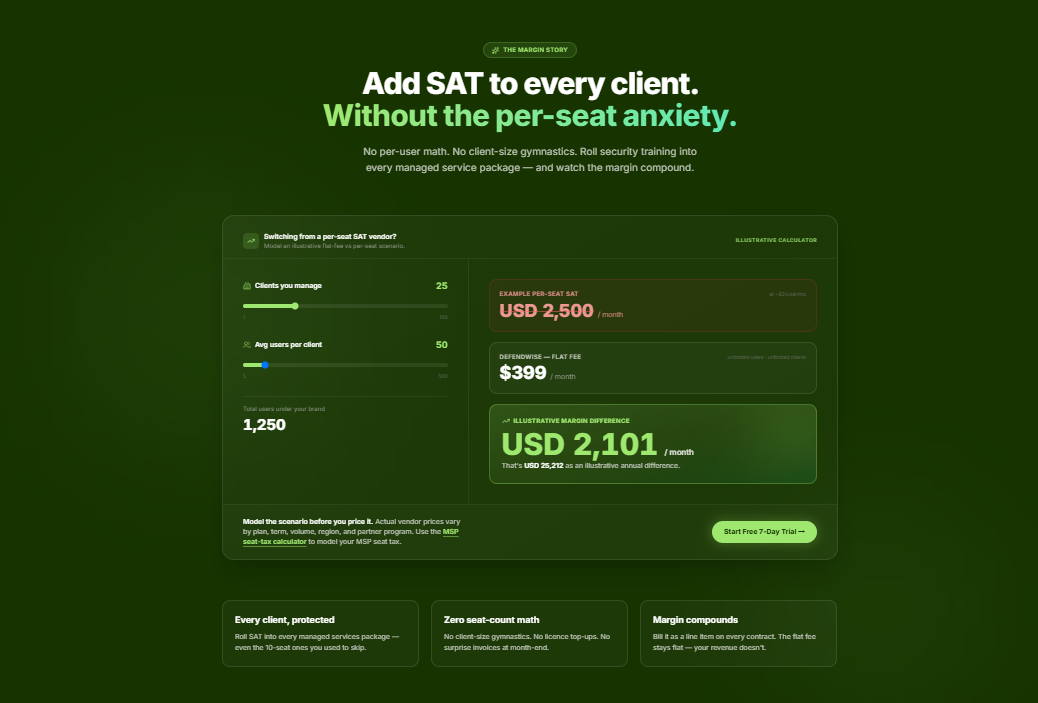
Another cost driver is operational support for multi-client or distributed environments. For MSPs, the ability to manage many organizations in one place can reduce the internal effort required to administer training, licenses, and reporting. White label delivery can also streamline client communications, helping MSPs present a consistent security program without rebuilding assets for each customer.
Budget for scale: MSP workflows and client trust
MSPs typically need solutions that scale without scaling admin overhead. Practical pricing should align with how you onboard clients, group users, and handle varying compliance expectations across customer environments. For example, you may need different training schedules for teams with higher risk exposure, such as finance, HR, or executive leadership. A platform that supports segmentation can help you deliver relevant training while keeping costs predictable.
Client trust is also part of value. Organizations want proof that training is happening, that users are improving, and that the MSP is providing measurable security support. Ask what your clients will receive: performance trends, engagement metrics, and clear summaries that leadership can understand. When reporting is easy to interpret, it reduces the likelihood of churn caused by perceived “checkbox” training. Strong reporting also helps you demonstrate incident-prevention impact during renewals and security reviews.
Conclusion
Instead of treating training as a one-time purchase, consider it an ongoing program that should reduce risk and support better security culture. When you can centralize management, deliver tailored experiences, and provide client-ready reporting, the pricing becomes easier to defend. DefendWise supports MSPs and their clients with AI-powered training, phishing awareness, white label delivery, and streamlined multi-client management for security teams. Look for automation that keeps onboarding and reporting consistent across customers, plus learning that stays relevant to real threats. A value-first selection process helps you avoid overpaying for features you won’t use while still investing where outcomes matter. With the right provider, your organization can turn security awareness into a repeatable system that strengthens defenses over time through actionable education.