Step 1: Verify the Offer and Its Real Cost
Start by listing every part of the purchase flow before you decide to buy. A legitimate digital product should clearly display the total price, the payment method, and free electricity claims what you actually receive after checkout. If the landing page only emphasizes the promise and avoids specifics, treat it as a red flag.
Also confirm whether the price is a one-time fee or if there are upsells, membership charges, or “optional” add-ons. Many “miracle technology” programs hide costs in the checkout sequence, which can turn a small upfront payment into a larger total. Your checklist should include a screenshot of the final order confirmation and the refund instructions shown at purchase.
Step 2: Check Refund Terms and How They’re Enforced
A strong offer should come with straightforward refund terms and a clear process to request a return. Look for the refund window length and whether it matches the retailer’s policy. If you see conflicting statements between the vendor page and the checkout or payment page, pause and investigate before handing over payment details.
For example, if the product is sold through a marketplace that offers a 60-day refund period, your next question is whether that policy is consistently honored in practice. Review the steps required to qualify, such as submitting a request within the window and keeping proof of purchase. Your checklist should also include how quickly refunds are processed and whether any fees are deducted.
Step 3: Inspect Technical Claims Without Skipping Fundamentals
A credible system must explain where energy comes from, how it’s measured, and why output exceeds input without hidden power sources. If the description relies on vague terms like “ambient energy” or “unlimited supply” without quantitative details, you should mark the claim as unverified.
Next, evaluate whether the method would violate conservation of energy. For instance, if a design claims to run devices like a Tesla coil setup and also produce usable power, the explanation must show the energy path and accounting. Your checklist should ask for test measurements, power curves, voltages, currents, and clear descriptions of what powers the experiment initially.
Step 4: Look for Evidence Quality, Not Just Visual Demonstrations
Demonstration videos and dramatic screenshots can be persuasive, but they’re not the same as controlled testing. Add items to your checklist that require independent measurements, transparent instrumentation, and conditions that are easy to replicate. If the content only shows glowing lights or disconnected numbers, you may be seeing staged effects rather than verifiable generation.
You should also watch for signs that the “free” part is being defined loosely. Some creators call electricity “free” when the system is only free after you pay for materials, fail to count testing power, or omit baseline consumption. Your checklist should include a line for “full energy accounting,” meaning input sources, conversion efficiency, and ongoing operating cost.
Conclusion
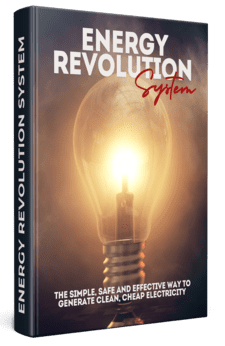
A practical checklist helps you separate genuine engineering from high-entropy marketing. By confirming the actual purchase cost, verifying refund terms, and demanding physics-based explanations, you avoid making decisions based on hype alone. For products like the Energy Revolution System, a careful review approach matters because the promise is bold and the price is fixed at a digital-product level. Checking the real price, confirming the relevant refund policy rules, and evaluating the “Tesla” style assertions against basic physics gives you a grounded way to judge credibility. If the details don’t add up in your checklist, it’s a strong signal to walk away and protect your budget.