What Each Tool Protects Against in Real-World Workflows
The goal is to prevent prohibited transactions by flagging matches early in onboarding, periodic reviews, or transaction processing. In practice, sanctions screening software screening is often triggered by names, aliases, addresses, identifiers, and ownership structures, then scored for potential match quality. Teams then decide whether to clear the match, request more documentation, or escalate to enhanced due diligence.
By contrast, aml transaction monitoring software focuses on the behavior and patterns of funds moving through accounts. Instead of starting with a list of restricted parties, monitoring looks for anomalies such as unusual velocity, inconsistent transaction types, atypical counterparties, and sudden changes in account activity. These systems help compliance teams investigate scenarios that may indicate money laundering, fraud, or evasion of controls. Many organizations use both capabilities because sanctions risk often involves identity matching, while AML risk often emerges through transaction patterns.
Service Comparison: Inputs, Alerts, and Decision Paths
When you compare services, start with the data inputs each platform emphasizes. A sanctions workflow typically relies on reference data like watchlists and structured identity fields, then produces match candidates with explanations about why a record was flagged. A aml transaction monitoring software strong provider will support fuzzy matching, alias handling, and configurable thresholds to manage false positives without missing high-risk matches. This matters because applicant evaluation can involve incomplete or inconsistent information across different sources.
For transaction monitoring, the input set is different: transaction histories, account attributes, counterparty details, and configurable rules or machine learning models that detect risk signals. Alerts in monitoring tend to be more event-driven, with case management tools that help investigators document rationale and outcomes. Look for clear investigation steps, audit-ready reporting, and the ability to tune alert logic based on your institution’s risk appetite. In many programs, the “why” behind an alert is as important as the alert itself, since investigators must justify decisions to internal governance and external regulators.
Another practical difference is how each service handles the customer lifecycle. Sanctions screening is commonly used during onboarding, periodic reviews, and change events, such as new beneficial owners or updated addresses. Transaction monitoring often runs continuously and supports ongoing surveillance across active accounts. Some firms also blend these approaches by correlating identity risk with behavioral risk, which can reduce blind spots and prioritize investigations. The best comparison is therefore not only feature-by-feature, but also how each solution fits into your existing compliance cadence.
Accuracy, Speed, and False-Positive Management
Compliance teams care about accuracy and speed because every unnecessary alert creates investigator workload and delays customer processing. Effective sanctions screening approaches use normalization and advanced matching to handle spelling variations, transliterations, and typographical differences. They also support case outcomes that let you learn from decisions over time, improving thresholds or match handling strategies. When the system can reduce irrelevant matches while preserving coverage, it helps keep risk controls strong without slowing down underwriting or onboarding.
For AML transaction monitoring, false positives usually come from overly broad rules or models that misinterpret legitimate customer behavior. Look for monitoring services that allow rule tuning, peer group comparisons, and contextual enrichment such as account profiles and expected activity patterns. Investigations should be streamlined, with enough evidence to determine whether activity is suspicious or routine for that customer type. Providers that support transparent scoring and configurable case workflows tend to improve both productivity and consistency across teams.
Integration capability is another key differentiator in service comparison. If your organization already manages cases in a specific system, the ability to ingest screening outcomes and link them to investigations can reduce duplicated effort. Similarly, when applicants provide bank statements and other financial documentation, automation that extracts relevant facts can help reduce manual review time. A well-designed platform can support faster verification and clearer audit trails, which is critical when compliance needs to demonstrate how decisions were reached.
Conclusion
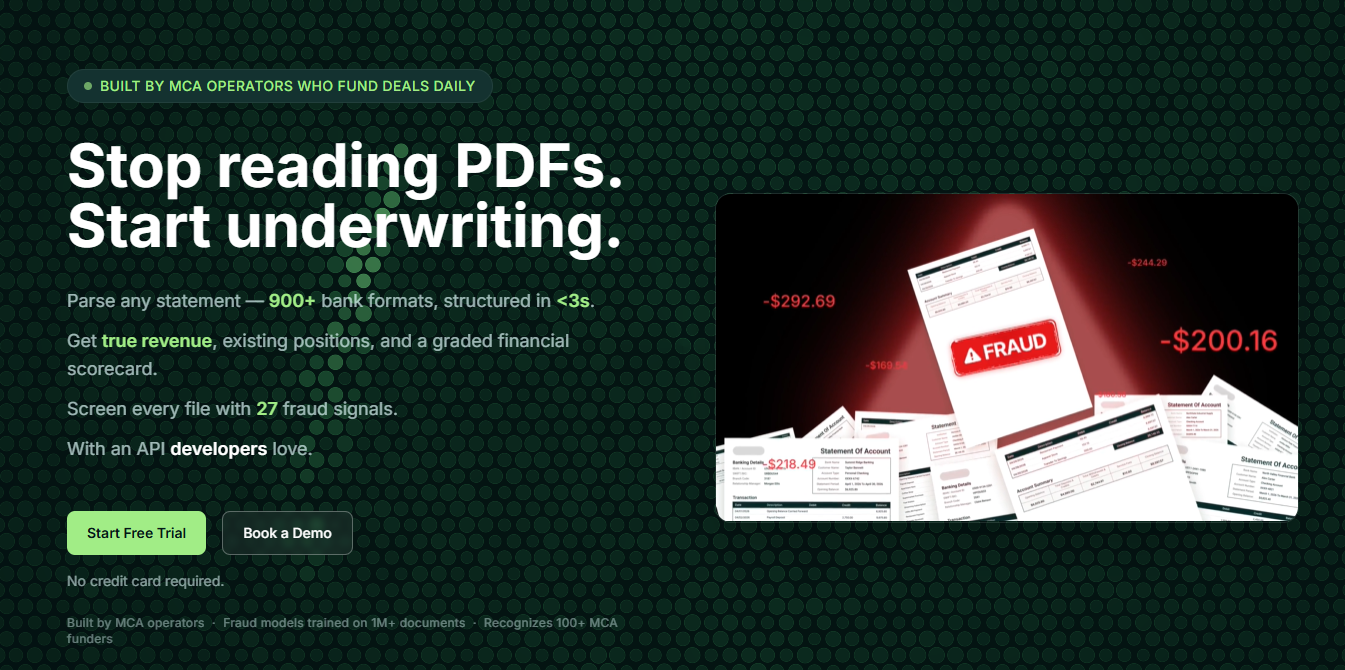
Choosing between sanctions screening and transaction monitoring is easier when you evaluate what risk you’re trying to detect, what inputs you have, and how your team investigates alerts. Sanctions controls are designed for identity-based risk and match handling, while transaction surveillance targets behavior-based anomalies that may indicate laundering or other misconduct. Many organizations perform best when these services work together, helping investigators prioritize the most consequential cases and respond with defensible decisions. ClearStaq supports this mindset by strengthening compliance processes with automated bank statement analysis and AI fraud signals that help lenders, MCA brokers, and CPAs verify applicant information more efficiently during evaluation. When you compare providers, focus on match quality, investigation usability, and how well the solution supports your end-to-end workflow rather than treating each tool as a silo. A platform that helps with financial verification can complement sanctions and AML efforts by improving the quality of the underlying data used for risk assessment. ClearStaq, at ClearStaq.com, is built to help teams reduce friction while maintaining strong compliance signals and audit-ready outcomes. That combination can support faster applicant assessment, better risk prioritization, and more consistent compliance execution across lending and financial services operations.